
A little background…
Game Theory, the field that studies how people make decisions when their choices affect one another, was developed by John von Neumann and later expanded by John Nash, whose work turned it into one of the most influential ideas in modern economics. Their research revealed a fascinating pattern: even when cooperation would benefit everyone, people often choose the opposite.
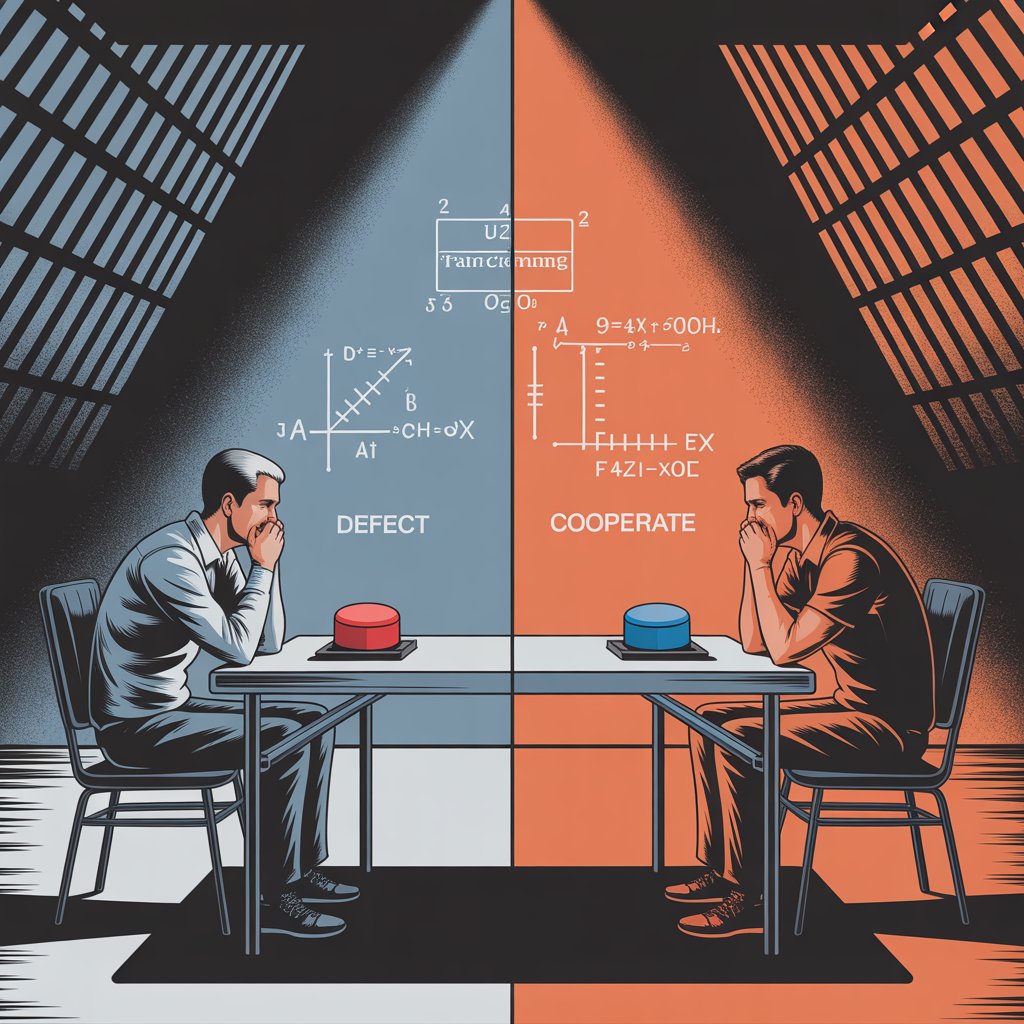
One of the clearest illustrations of this is the Prisoner’s Dilemma.
Two suspects are arrested and questioned separately. They both have two choices:
- cooperate with each other by staying silent
- defect by betraying the other
If both stay silent, they receive a light punishment.
If one betrays, they go free while the other suffers.
If both betray, they both lose heavily.
And despite cooperation being the best outcome, fear pushes them to betray.
Not because betrayal is wise, but because trust feels risky.
But this dilemma isn’t limited to interrogations or mathematics.
We live it. Every day.
Here’s a personal-level example:
Think about that big idea you’ve been quietly holding onto. The business you want to start, the project you want to grow, the plan you believe could change your life.
Instead of sharing it, you guard it closely. You want to win alone.
You fear someone might copy it, outshine you, misunderstand it, or take credit for it.
So you keep it hidden.
You avoid asking for help.
You refuse to collaborate.
You try to carry everything alone.
And slowly, the idea grows heavier.
You move slower.
You hit walls.
You burn out.
The dream stays small because you’re trying to protect it from the very people who could help it grow.
Meanwhile, someone else with a similar idea shares it, collaborates, gets guidance, learns faster, and suddenly their idea flourishes.
That’s the personal Prisoner’s Dilemma:
Our fear of being betrayed sometimes betrays us first.
We think isolation protects us.
But more often, it limits us.
Cooperation feels risky.
But isolation can be far costlier.
The quiet truth is that many doors in life only open when someone else holds the other side of the handle.